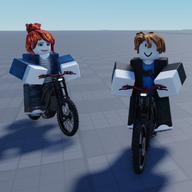
Bike Universe bike handling: A Practical Guide to Control, Turns, and Tricks
Improve Bike Universe bike handling with focused practice tips for turns, braking, and wheelies, plus a clear look at what the sources confirm.
Get Comfortable With Your Bike Before Chasing Bigger Tricks
A clean turn gives you a better foundation for your next trick. Learning how your bike responds helps you approach corners, recover from mistakes, and make practice more consistent. This Bike Universe bike handling guide explains the confirmed features, the available third-party advice, and practical ways to learn your bike’s behavior.
The official Bike Universe description lists realistic physics, electric bikes, dirt bikes, pedal bikes, skill-based wheelies and tricks, burnouts, and two-seated bikes. It also identifies the game as a beta, so expect changes as development continues.
That description establishes the broad riding features, but it does not explain braking distances, steering sensitivity, traction, or suspension. Treat the practice suggestions below as ways to observe the current game yourself, rather than as a verified breakdown of its physics calculations.
What the Sources Establish About Bike Handling
Bike Universe’s official description makes skill-based riding a central feature. However, “realistic physics” is a broad description: it does not establish exactly how speed, surface type, or rider inputs affect every bike.
The third-party pedal bike handling guide offers more specific advice. It presents pedal bikes as a manageable starting point, recommends measured steering and braking practice, and describes electric and dirt bikes as alternatives for different riding goals. Those details are source claims, without independent testing in the supplied evidence.
Here is how the available information compares:
| Topic | Officially confirmed | Additional third-party guidance |
|---|---|---|
| Bike categories | Electric, dirt, and pedal bikes are listed | The guide recommends pedal bikes for learning control |
| Riding physics | Realistic physics is advertised | The guide emphasizes momentum, cornering, and landing alignment |
| Wheelies and tricks | Skill-based wheelies and tricks are listed | The guide suggests beginning with brief wheelie attempts |
| Two-seated bikes | Their availability is confirmed | Exact coordination and passenger mechanics are not established |
Use this distinction when choosing advice to follow. The official description confirms which broad features exist; the third-party guide provides ideas to try in your own session.
The evidence does not establish a universal best-handling bike, exact performance ratings, or a reliable category ranking. A bike that feels comfortable on your usual route is a more useful starting point than an unsupported tier list.
Practice Steering and Braking With a Repeatable Route
The third-party guide recommends starting with slow loops, practicing circles, and stopping beside landmarks. These are useful practice ideas because they give you something consistent to compare between attempts.
Choose a short route you can repeat comfortably. Keep the bike and route the same while you work on one part of your riding. Changing several things at once makes it harder to identify what helped.
For steering practice, begin with a broad turn and pay attention to where you finish. On the next attempt, adjust your approach pace or steering input, but avoid changing both at once. Your goal is to discover a repeatable approach that keeps you on your intended line.
For braking practice, select a visible landmark and try stopping near it from a similar approach each time. Observe whether you finish before or beyond the marker. The sources provide no measured stopping distances, so build your judgment from what happens with the bike you are using.
The pedal bike guide also recommends preserving momentum through smooth riding. It claims pedal bikes take longer to regain lost speed, although no acceleration measurements are supplied. You can explore that advice by comparing a smooth corner with an attempt that includes a full stop.
A simple practice routine is:
- Ride the route at a pace you can control.
- Choose one turn or stopping point to improve.
- Repeat it while changing one input at a time.
- Attempt the full route again once that section feels consistent.
If a corner repeatedly goes wrong, simplify the approach. Give yourself more room and reduce the number of corrections you make during the attempt. Treat this as a learning method, not a guaranteed solution to every handling problem.
Compare Bikes and Build Toward Tricks
The third-party guide describes pedal bikes as approachable, electric bikes as suited to faster travel, and dirt bikes as useful on uneven terrain. These are third-party source claims rather than verified performance tests, but they provide reasonable questions to investigate when comparing bikes.
If you have access to different categories, try them on a familiar route. Pay attention to how easily you can follow the same line, stop near your chosen landmark, and recover after a mistake. Familiarity with the route helps you focus on differences you actually notice.
Avoid assuming that a category name guarantees a particular result. The supplied evidence does not document individual bike statistics, handling upgrades, tire settings, or suspension tuning.
For tricks, the official description confirms that wheelies are skill-based. It does not supply the control bindings or explain the balance system. Check any instructions available in your current version before attempting a maneuver; the supplied sources do not establish specific keyboard, controller, or touch inputs.
The third-party guide recommends short wheelie attempts and small jumps before combining maneuvers. As a practice approach, that keeps each attempt focused:
- Work on one maneuver at a time.
- Choose an open area with room to recover.
- Notice what happened immediately before you lost control.
- Return to ordinary riding between attempts so you can reset your approach.
For jumps, the guide advises moderate approaches and landings aligned with your route. Treat that as source advice to evaluate. There is no verified ideal takeoff speed, landing angle, or timing window in the supplied material.
A useful personal milestone is completing your chosen route consistently and performing a maneuver without losing control afterward. That is a practice goal, not an official progression requirement.
FAQ: Bike Universe Bike Handling
What is the best way to improve Bike Universe bike handling?
Use a familiar route and focus on one skill at a time. Practice turns, stops, and individual tricks separately, then combine them once your attempts become consistent. This makes it easier to understand which changes improve your riding.
Are pedal bikes the easiest bikes for beginners?
The third-party pedal bike guide recommends them for beginners because of their claimed forgiving handling. The official description confirms that pedal bikes exist, but it does not rank their difficulty against electric or dirt bikes. Try an available pedal bike and judge whether its response suits you.
Does Bike Universe have realistic braking and suspension?
The official description advertises realistic physics, but the supplied evidence does not document braking formulas, suspension behavior, traction calculations, or tuning options. Practice can help you learn the observable response of your bike, but those underlying mechanics remain unverified.
What controls do I use for wheelies?
Wheelies are officially confirmed, but their exact controls are not established by the supplied evidence. Consult any current in-game control instructions before practicing, then begin with brief attempts in an area where you have room to recover.